
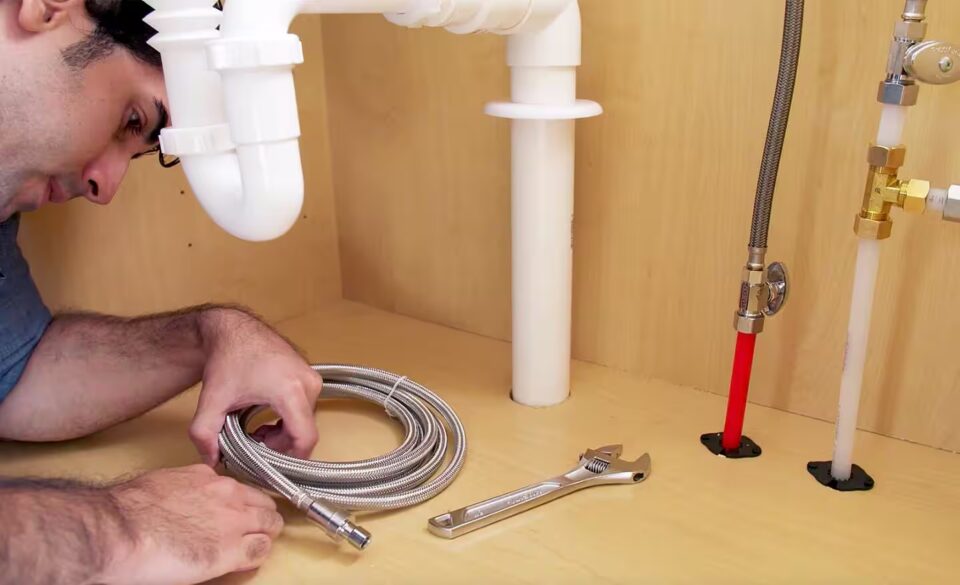
The least expensive component in your entire appliance system is also the one most likely to rupture and destroy your kitchen or laundry room. A flexi hose is worth a couple of dollars but that’s all it takes to send gallons of water creeping through your floorboards or carpets. It lies silently out of mind behind a clothes washer, a dishwasher, or a refrigerator.
When it finally gives up, it doesn’t leak neatly, hose leaks spurt out a torrent. And that’s usually when you’re not there – while you’re at work – while you’re asleep. This is a maintenance guide, not a horror story. Appliance water leaks are easily managed so long as you know what to look for, and when to act.
Why These Hoses Fail So Often
Hidden away out of sight are appliance water hoses, the likes of which supply your washing machine, run to your dishwasher, or feed your fridge’s ice maker. This location poses a common problem: if you can’t see them, you’re not about to notice any warning signs. No one ambles past the back of the washing machine and thinks, “Huh, is that a bulge?” Dishwasher connectors don’t get an overhead light. The refrigerator line is hidden behind the appliance. If you can spot a leak by eye back there, you’re already pretty deep into home maintenance.
It’s a slow and expensive drip because the moisture has nowhere to go. In the case of a leaky connector or hose, it’s leaking directly into the cavity of your floor, your walls, or your cabinets. It’s hard to picture an emergency where the water starts pooling around an appliance, but that’s usually how it turns out.
The second problem is merely age and quality. The connectors that came when you bought your washing machine are likely cheap rubber. Rubber oxidizes and cracks, although a good solid yank from a foot (or more) of vibrating washing machine will do the trick just as well. The braided-steel hoses on the market now to replace old rubber hoses are indeed a lot better; they are rubber on the inside, so they don’t expand like a balloon. But the rubber inside them still ages, and over time, the same stresses will fatigue and fail them.
Warning Signs Worth Checking For
A failing flexible hose typically shows subtle signs before it completely fails. These warnings are quite small but they are obvious:
Bulging or soft spots on the length of the hose indicate that the internal rubber layer is breaking down under pressure. A kink that has been on the fold for months already weakens the material in that area. If there are rust spots on the steel wrap of a braided line, moisture has been accumulating here, probably because the fitting has dripped slowly. The damp or chalky white residue around the connection point indicates a mineral deposit due to water that has already leaked, albeit slowly. And if the washing machine or sink smells musty, that’s often the first thing people notice before identifying the source.
Nothing in this list indicates that a catastrophe is imminent. It just means you’ll have to take a closer look and probably replace the part.
What To Do When A Hose Actually Bursts
When it happens, it happens fast. Your first move is to shut off the fixture valve if it’s accessible, or the main water supply if it isn’t. Every second between the burst and the shut-off is more water on your floor, so don’t waste time looking for towels first.
If there’s any chance water has reached an electrical outlet or the appliance itself, cut power at the breaker before you do anything else. Once the water’s off, move whatever belongings you can out of the path, and start containing what’s already spread with towels, a wet vacuum, or buckets – whatever gets you ahead of it fastest.
A flexi hose burst is one of the more common plumbing emergencies homeowners deal with, and knowing the recovery steps before it happens is what actually limits the damage. Once the immediate flooding is under control, that’s the point to call a plumber, both to fix the failed connector and to check whether the surrounding pipework took any damage.
A Five-Minute Inspection Routine For Each Appliance
You don’t need to schedule a special day for this. Pick a laundry day and add five minutes to it.
For the washing machine, pull it away from the wall enough to see the full length of both hoses – hot and cold. Check the fittings at both ends, not just the middle of the hose, since that’s where most failures start. For the dishwasher, open the cabinet under the sink and run your hand along the supply line and its shut-off valve. You’re feeling for dampness, not just looking, because a slow drip can be invisible in a dim cabinet. For the fridge, slide it out if you can and look at the plastic ice maker tubing where it connects to the wall valve. This tubing is often the cheapest, most overlooked part of the whole system, and it gets brittle with age faster than rubber does.
If you’ve got a water heater, check its connectors too while you’re at it. Same failure pattern, same fix.
How Often To Actually Replace These Lines
General advice from any manufacturer you ask is to plan on replacing the washing machine hoses about every five years whether they appear worn or not. Dishwasher supply lines are in the same five-to-seven-year range. These are not just random numbers tossed out; five to seven years is about how long rubber and braided connectors last before the risk of failure rises.
Write the install date on the hose with a permanent marker when you put in a new one. It sounds small, but it’s the easiest way to actually track this instead of guessing.
Shut-Off Valves Are Part Of This System Too
A brand-new flexi hose connected to a seized shut-off valve is still a disaster waiting to happen. If a hose does burst and the valve behind it won’t turn, you can’t stop the flow at its source. You’re running to the main water shut-off instead, which costs you precious time you don’t have during a live leak.
Old gate valves – the multi-turn kind – are infamous for seizing after decades of dormancy. Quarter-turn valves are the superior standard now: a quick 90-degree turn and the flow is pinched off, and they’re much less likely to have corroded into a stuck position. If you try your appliance shut-off valves and they don’t move easily, or don’t move at all, that’s something to get fixed before it’s ever stress-tested in an emergency.
Water Pressure Is The Hidden Accelerant
Most people don’t consider the water pressure in their homes unless something breaks. However, when pressure is above about 80 psi, it exerts constant stress on each and every flexible connector within the house. Water hammer, the pressure spike that occurs when a valve shuts off suddenly, applies additional shock loads on top of the baseline stress. Over time, the combination of the two causes rubber and braided hoses to wear out more quickly than if they were subjected to normal use only.
You can check the static pressure in your home with an inexpensive gauge that threads on to an outdoor hose bib. If you’re consistently reading above 80 psi, installing a pressure-reducing valve at the main line is a relatively simple remedy. It’s one that also protects more than just your appliance hoses – it eases the strain on every fitting within the house.
Household leaks, nearly 10,000 gallons a year, enough for about 270 loads of laundry, are water wasted, per the EPA’s WaterSense program. A lot of that waste is due to slow, steady dripping caused by high pressure and aging connectors.
Installing A Replacement The Right Way
If you’re replacing a hose yourself, a few habits make the difference between a fix that lasts and one that fails again within a year.
- Don’t overtighten the fitting. It’s a common instinct to crank it down “just to be safe,” but overtightening compression fittings can crack the fitting or distort the seal, which causes the exact leak you were trying to prevent.
2. Use the correct thread sealant or tape on threaded connections rather than relying on the washer alone.
3. Choose the shortest hose that reaches the connection without strain – a too-long hose gets coiled or kinked to fit, and that kink becomes tomorrow’s failure point.
4. Never bend or force a hose into a tight space behind an appliance. If it doesn’t sit naturally, you’ve got the wrong length or the wrong fitting angle.
Leak detection devices are worth considering here too. Smart sensors placed near appliance connections can catch a pinhole leak or a slow drip long before it becomes a flood, and some tie into automatic shutoff systems that cut water flow the moment they detect a problem. For appliances tucked in hard-to-check spots, like a fridge against a wall, this kind of device does the inspection work you can’t easily do yourself every week.
Knowing When To Call A Plumber Instead
Replacing a washing machine hose or a dishwasher line can easily be done by most skilled homeowners. A few minutes with a wrench and a new part available at any local hardware store.
Some tasks are more complex. If you have corroded pipe stubs behind the wall, a shut-off valve that needs to be replaced, or adding a dedicated shut-off where one doesn’t currently exist, this requires you to work on the home’s fixed plumbing, and not just the flexible connector. Whole-house shut-off installations, especially those linked to a smart leak detection system, usually require a licensed plumber to ensure everything is properly rated and complies with local building and plumbing codes. If you’re not sure if a fitting is original to the house or has been modified before, usually you should call someone who can check the full run of pipe, not just the visible hose.
The flexi hose behind your washer or fridge is always under constant pressure doing all the unglamorous work, and it’s designed to wear out eventually. Just check it a couple of times a year, replace it before it asks you to, and make sure the valve behind it actually turns. That’s the whole system, and it’s a lot cheaper to manage on your schedule than on its.